How Can Better Shift Handovers Reduce Risk in a Homeless Hostel?

The hostel handover process is a practical safeguard that helps staff transfer essential information between shifts without losing sight of residents’ wellbeing, current risks or outstanding actions. It matters for risk management because a missed detail can delay safeguarding responses, leave a building hazard unresolved or create confusion about who is responsible for follow-up. A consistent approach also supports confidentiality, accountability and continuity of care. This article explains what every handover should include, how to structure written and verbal updates, how to manage sensitive information, and how to train staff and measure improvement. It concludes with practical guidance and answers to common questions from hostel teams.
Why the hostel handover process matters for risk management
A shift handover is the point at which responsibility moves from one member of staff to another. In a homeless hostel, that changeover can involve residents with different needs, active safeguarding concerns, incidents in progress and practical issues affecting the building. A clear shared picture of risk helps the incoming team make sound decisions from the first minute of a shift. It also gives residents a more consistent experience, rather than making them repeat important information whenever the staff team changes.
How missed information can affect residents and staff
When a relevant detail is missed, the next shift may not know that a resident is distressed, expecting a professional visit or involved in a developing disagreement. Staff might offer advice that conflicts with an existing support plan, fail to make a promised call or overlook a change that should have prompted further assessment. These gaps can affect trust as well as safety.
The impact is not always immediate or dramatic. A missed appointment, an unreported broken lock or a failure to pass on a change in behaviour can become more serious when nobody realises that it has been left unresolved. Staff can also be placed under avoidable pressure when they begin a shift without the context needed to prioritise their work.
The link between handovers, safeguarding and duty of care
Safeguarding depends on people noticing concerns, recording them appropriately and taking proportionate action. The handover does not replace formal safeguarding procedures, but it helps ensure that the right people know what has happened and what still needs attention. We should distinguish between information that needs immediate escalation and information that is useful for general continuity.
A handover also supports duty of care by making responsibilities visible. If a resident has disclosed a concern, or if a professional has asked the hostel to monitor a particular risk, the incoming worker needs enough information to respond safely. We can use the financial exploitation warning signs as one example of why patterns matter: a single transaction or conversation may not explain what is happening, while repeated changes in behaviour may warrant careful, respectful follow-up.
Common risks caused by informal or inconsistent updates
Informal updates are not automatically unsafe. A brief conversation can be useful when it sits alongside a reliable written record and the information is checked. The difficulty comes when each worker decides independently what counts as important, where it should be recorded or who is expected to act on it.
Common weaknesses include:
- relying on memory rather than recording the relevant facts;
- discussing a concern without naming the action or owner;
- treating a repeated issue as routine because it has become familiar;
- passing on sensitive information where other residents or visitors can hear it.
These habits make it harder to identify patterns and easier for small omissions to be repeated. A consistent hostel handover process gives staff a shared minimum standard without preventing professional judgement.
Balancing confidentiality with the need to share information
Good handovers are neither indiscriminate nor secretive. We should share information that the next worker needs in order to provide safe support, manage a foreseeable risk or complete an agreed task. We should avoid unnecessary personal detail, speculation and conversations in places where confidentiality cannot be protected.
The safest approach is usually to ask what purpose the information serves. If it changes how the incoming worker should respond, it may belong in the handover. If it is merely interesting or personal, it may not. Where uncertainty remains, staff should follow the organisation's information-sharing and safeguarding policies and seek advice from a manager or safeguarding lead.
Share what is necessary for safe, consistent support, and record why further action is needed.
That principle keeps the conversation practical. It also protects residents from being reduced to a collection of labels or repeated stories when the team only needs a clear account of current circumstances.
What information should be included in every handover
The content of a handover should reflect the hostel's residents, staffing model and operating hours. Even so, every shift needs a dependable core: what has changed, what is currently risky, what has been done and what remains outstanding. We can then add detail where the situation requires it, rather than producing a long account in which urgent points disappear.
The following areas provide a useful structure. They should be adapted to local policy and the level of support offered, with formal records used for detailed case notes, incident reports and medication documentation. The handover itself should point staff towards those records without becoming a substitute for them.
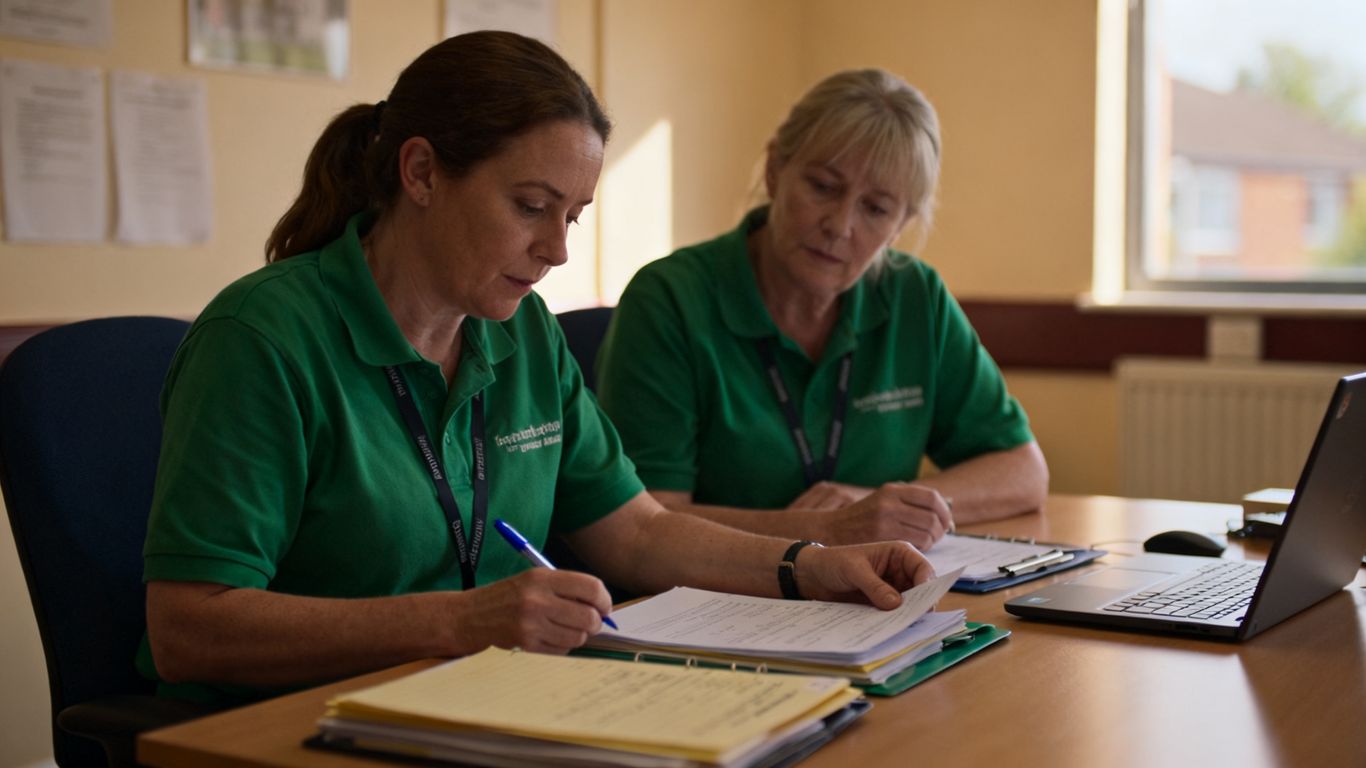 Resident wellbeing, welfare and safeguarding concerns
We should pass on material changes in presentation, mood, communication, engagement or behaviour. This might include a resident appearing unusually withdrawn, expressing fear about another person, reporting a concern or needing support to attend an appointment. The wording should describe what was seen or heard and explain what response has already been made.
We should also identify whether the concern is new, ongoing or already referred. That distinction matters because an incoming worker may need to check on a resident promptly, maintain an agreed level of observation or contact an external professional. Personal information should be shared only with those who need it for their role.
Incidents, conflicts and changes in risk levels
Incidents should be handed over with enough context to make the next decision safely. Staff should explain who was involved, what happened, when it happened, whether anyone was injured or threatened, what immediate steps were taken and whether further action is outstanding. We should avoid presenting assumptions about motives as facts.
Changes in risk level deserve particular attention. A disagreement that has apparently settled may still require monitoring if there have been threats, repeated contact or damage to property. Equally, a resident who was previously considered low risk may need a fresh assessment after a significant change in circumstances.
Medication, health needs and support-plan updates
Health information should be accurate, relevant and handled through the correct record. The handover may need to confirm that a medication prompt was completed, that a health appointment has changed or that a resident has asked for support with an agreed need. It should not encourage staff to improvise clinical advice or alter a medication arrangement without proper authority.
Support plans can change quickly. A new goal, referral, restriction, reasonable adjustment or resident preference may affect how the next shift approaches a conversation. We should state what has been agreed, by whom and when it should be reviewed, rather than simply saying that a plan has been “updated”.
Building issues, staffing matters and operational tasks
A safe handover also covers the environment in which support takes place. Broken doors, faulty alarms, leaks, heating problems, hazards in communal areas and access concerns may all affect residents and staff. A room or facilities checklist can make property information more consistent; the Room Handover Checklist Template describes recording conditions, notes, cleaning status and agreed corrective actions for residential settings.
Staffing information matters too. The incoming team should know about absences, changes in cover, lone-working arrangements, planned visitors and tasks that cannot safely be delayed. Each item should have a clear status, such as reported, awaiting attendance, completed or escalated, so that the next shift does not start the same investigation again.
How to create a consistent shift handover process
Consistency comes from designing a process that people can follow when the hostel is busy, short-staffed or dealing with an incident. It should be simple enough for routine use but specific enough to prevent important information being lost. We should involve the staff who use it, test it during different shifts and revise it when it creates confusion.
A useful process has three parts: a common set of information, a reliable place to record it and an agreed method for deciding what needs action first. It also makes ownership clear. Without that final part, a well-written handover can still leave everyone assuming that somebody else will follow up.
Defining the essential information to pass on
Before creating a form, we should ask what the incoming worker genuinely needs to know. The answer will differ between a night shift, a day shift and a weekend, but the core questions remain familiar: what has changed, who may be at risk, what action has been taken and what must happen next?
We can keep the core brief by separating current status from background. Background belongs in the resident's main record or support plan. Handover information should focus on developments, decisions, pending actions and anything that changes the way the next shift should work.
Using a standard handover checklist or template
A standard template reduces variation between workers and makes omissions easier to spot. It may include sections for resident updates, incidents, safeguarding, health, building safety, staffing and outstanding tasks. A digital form can offer required fields and time stamps, while a paper form may be more practical in some environments; the important point is that staff know which record is authoritative.
We should avoid creating a form so detailed that staff stop using it properly. A short checklist, supported by fuller records where needed, is often more useful than a document that encourages copied text and vague descriptions. A shift handover guide can also help teams think about continuity, significant events, support-plan changes, risks and appointments when reviewing their own structure.
Separating urgent actions from routine updates
Not every update deserves the same speaking time. We should identify matters requiring immediate attention before moving to routine news, housekeeping and general continuity. This helps a worker who is joining late or taking over during a busy period understand what cannot wait.
A practical priority structure might look like this:
- immediate threats to life, safety or safeguarding;
- residents needing prompt welfare checks or agreed support;
- incidents, professional contacts and time-sensitive appointments;
- building, staffing and operational issues;
- routine updates and information for the next planned review.
The categories are a prompt, not a substitute for judgement. Once the urgent points have been made, the team can return to routine matters without allowing them to crowd out a serious concern.
Assigning responsibility for follow-up tasks
Every outstanding action should have an owner, a time frame and a record of completion. “Someone to call the adviser” is not sufficiently clear if several workers could interpret it differently. We should name the role or person responsible, state when the action is due and record any dependency, such as waiting for consent or an external response.
The incoming worker should be able to confirm which tasks they have accepted. If a task cannot be completed, that fact should return to the next handover with a reason and a revised plan. This creates continuity rather than quietly carrying unfinished work from one shift to another.
How to run safer and more effective handover meetings
A handover meeting needs enough structure to protect important information, but it should not become a performance in which staff read every line without thinking. The person leading it should create space for questions and make it clear when a point requires immediate escalation. We should also recognise that some information is better discussed privately rather than in front of the whole team.
The meeting works best when the environment supports concentration. A predictable order, a short attendance list and clear records help staff listen actively. Where the hostel uses a separate operational handover plan, the Hotel Handover Plan illustrates how a customisable plan can organise goals and essential details, although the local document should be designed for the hostel's own support and safeguarding requirements.
 Choosing the right time, location and attendees
The handover should occur at a defined point in the shift change, with enough overlap for the outgoing worker to explain urgent matters and the incoming worker to ask questions. The room should be quiet, private and accessible to the staff who need to attend. If residents or visitors are nearby, names and sensitive details should not be discussed where they can be overheard.
Attendance should match the purpose. Staff taking responsibility for the next shift normally need to be present, while managers, support workers or other professionals may join when their involvement is relevant and permitted. If someone cannot attend, the team should know how they will receive the required information and how they can ask follow-up questions.
Using a structured order for verbal updates
A consistent verbal order prevents the most confident speaker from setting the entire agenda. We can begin with immediate safety or safeguarding matters, then cover resident updates, incidents, health and support-plan changes, followed by building, staffing and routine tasks. The structure should be familiar enough that staff notice when a section has not been addressed.
The person leading the handover can pause after each priority area and ask whether anything is missing. That small pause is useful in a busy service, where staff may remember a relevant detail only after hearing another update. It is better to correct the record during the meeting than rely on memory later.
Confirming understanding through questions and read-backs
Listening is not the same as understanding. For a significant instruction, the incoming worker can repeat the action, time frame and escalation route in their own words. The outgoing worker can then correct any misunderstanding before leaving the building.
Questions should be welcomed, especially from staff who are new to the hostel or unfamiliar with a resident's support plan. We should ask precise questions: what changed, what evidence do we have, what has already been tried and what should happen if the situation worsens? These questions turn a passive update into a shared safety check.
Managing interruptions, disagreements and incomplete information
Hostels rarely offer perfect conditions. A call may come through, a resident may need urgent help or two workers may remember an event differently. The meeting leader should record the interruption, return to the unfinished point and distinguish confirmed facts from information still being checked.
Disagreement should be handled without blame. If accounts conflict, we should record the uncertainty, identify who will verify it and take any immediate precaution that policy requires. Staff should never be pressured to present an assumption as certainty simply to make the handover sound complete.
How written records can support the hostel handover process
Written records give the team a stable reference after the conversation ends. They help staff check what was reported, what action was agreed and whether a task has been completed. They also support management review when a pattern emerges across several shifts.
A record is useful only when it is timely, accurate and protected. We should define where handover notes are kept, who can access them and how they connect to incident reports, support plans and safeguarding records. The handover should point to the fuller document when detail or formal escalation is required.
Choosing between paper, digital and hybrid records
Paper records can be quick and familiar, particularly where staff need to write during a shift. Digital records may make searching, time-stamping and access control easier. A hybrid approach can work, but only if staff understand which version is current and how information moves between the two.
The choice should follow the service's policy, equipment, connectivity and data-protection arrangements. We should also consider what happens during a power or system failure. A process that works only under ideal technical conditions is not reliable enough for a service operating around the clock.
Recording facts clearly without subjective language
Records should say what happened, what was observed, what the resident said and what staff did. “Resident was aggressive” gives little useful detail; a clearer entry might describe raised voice, a stated threat, the people present and the steps taken, provided those details are accurate. We should avoid labels, diagnoses outside our role and conclusions that have not been established.
The aim is not cold or impersonal writing. Respectful factual language protects dignity while giving the next worker something they can act on. Direct quotations may be useful when the exact words matter, but they should be used carefully and only when relevant.
Protecting sensitive resident information
Access to handover records should be limited to people who need the information for their work. Screens should not be left visible, paper should not be abandoned in communal areas and verbal discussions should be moved to a private space when necessary. Staff should follow local retention, access and information-sharing rules.
We should also consider the resident's dignity when describing trauma, health, relationships or alleged behaviour. Including more detail than the next worker needs can increase risk without improving support. When information must be shared urgently, the record should explain the action taken and the reason for sharing.
Making records easy to review and audit
A reviewer should be able to identify the date, shift, author, resident or area concerned, action required and current status. Consistent headings and plain language make this easier. Entries should be completed close to the event where possible, with later corrections made transparently rather than by silently changing the original account.
Periodic checks can look for missing fields, vague wording, repeated unfinished tasks and delays in escalation. The purpose is learning, not catching people out. If the same omission appears repeatedly, the process or training may need to change rather than simply asking staff to try harder.
How to prepare staff for reliable shift handovers
A good form cannot compensate for staff who are unsure what counts as risk or who feel unable to ask for clarification. Preparation therefore needs to cover judgement, communication and the practical use of records. We should explain not only what to write, but why accurate handover protects residents and colleagues.
Training should be reinforced in ordinary work. Short discussions after a difficult shift, supervised practice and constructive feedback can make the process more natural. Staff also need confidence that raising an uncertainty will be treated as responsible practice rather than criticism.
Training staff to recognise and communicate risk
Staff should learn how to notice changes in wellbeing, behaviour, relationships, health, the environment and access to support. They should understand the difference between an observation, a concern, an incident and an immediate emergency. Training should also cover local escalation routes and when a handover is not enough on its own.
We can practise using short scenarios. One worker describes a change, another identifies what needs to be recorded and a third decides what must be passed on immediately. Repeating the exercise with different shifts helps staff turn broad principles into clear actions.
Setting expectations for agency, temporary and relief workers
Temporary staff may know the building but not its residents, systems or local thresholds for escalation. Before their first shift, we should explain the handover format, access arrangements, confidentiality expectations, emergency procedures and who provides support when information is unclear.
A short induction checklist can make the expectation consistent. Relief and agency workers should be encouraged to contribute information from their shift, while permanent staff remain responsible for ensuring that relevant records and actions are completed according to policy. No one should be expected to guess how the service works.
Supporting staff to challenge unclear or missing information
A reliable team makes it safe to say, “I do not understand what happens next.” Staff may hesitate because they do not want to appear inexperienced or to delay the meeting. Managers can change that by asking regularly whether each action, owner and time frame is clear.
We should also provide a route for raising concerns after the handover. If a worker notices that an important detail was omitted, they need to know whom to contact and how to update the record. Questions are a safeguard, not an interruption when they prevent an unsafe assumption.
Reviewing handover quality through supervision and practice
Supervision can explore how staff decide what to prioritise, how they record uncertainty and whether workload or interruptions are affecting the process. Managers can review examples with staff, removing identifying details where appropriate, and agree one or two practical improvements rather than offering general criticism.
Recruitment information can help set expectations before people join. For example, the Hightown support worker role describes communication, flexibility, safe environments and ongoing training as part of the work. Those themes can inform a local induction, while the hostel still needs to teach its own handover policy and systems.
How to measure and improve handover safety over time
Handover quality should be reviewed as an ongoing safety process, not assessed only after something goes wrong. We need measures that show whether information is reaching the right people, whether actions are being completed and whether residents experience more consistent support. Numbers alone will not explain why a gap occurred, so they should be considered alongside staff insight and case review.
A small set of measures is usually more useful than a large dashboard. We can establish a baseline, agree who reviews the information and set a date for discussing what it means. Changes should be tested carefully so that a new form does not create extra administration without improving practice.
Tracking incidents, missed actions and repeat issues
Teams can monitor incidents where a handover omission contributed to delay, missed tasks that reappear across shifts and repeat problems involving the same building area or process. We should record the circumstances, not simply count staff errors. A missed action may reflect unclear ownership, an unrealistic deadline, poor access to the record or a sudden emergency.
Useful review questions include:
- Was the information available at the time of handover?
- Was it recorded in the agreed place?
- Did the incoming worker understand the required action?
- Was the action realistic for that shift?
The answers help us choose a proportionate response. We may need clearer wording, better staffing cover, a different escalation route or additional training rather than another reminder to complete the same form.
Gathering feedback from staff and residents
Staff can explain where the process breaks down in practice. They may find that handovers are too long, that the quiet space is unavailable or that a digital system is difficult to access during night work. Short surveys, team discussions and supervision are useful ways to collect this information without adding a heavy reporting burden.
Residents can also tell us whether support feels consistent and whether they are repeatedly asked to explain the same situation. Feedback should be voluntary, accessible and handled with care. It should not ask residents to disclose more than they wish to share, and it should be combined with other evidence rather than treated as a simple satisfaction score.
Reviewing the process after serious incidents or near misses
A serious incident or near miss should prompt a timely review of the information pathway. We should ask what was known, what was passed on, what was misunderstood and whether the process made the safe action obvious. The review should include relevant staff and, where suitable, the resident's perspective.
The aim is learning and prevention. Blame can make people less willing to report uncertainty, while a fair review encourages honest accounts. Any changes should be assigned to an owner, given a completion date and checked later to see whether they have worked.
Updating the process as the hostel’s needs change
A hostel's resident population, staffing pattern, building layout and partner relationships can change. A handover designed for one level of support may become too limited or too burdensome when those conditions shift. We should review the process after changes in service design, new technology, recurring incidents and feedback from staff or residents.
Updates should be introduced clearly. Explain what has changed, why it matters, where the new record or template is kept and what staff should do during the transition. A short review cycle then helps us keep the hostel handover process useful, rather than allowing it to become a document that exists separately from daily work.
Key Takeaway for Hostel Managers
- Use one consistent handover structure covering risk, safeguarding, resident updates, building issues and outstanding tasks.
- Give every follow-up action a named owner, deadline and clear escalation route.
- Protect confidentiality by sharing only necessary information in private settings and secure records.
- Review missed actions, incidents and staff feedback regularly, then update the process when evidence shows a gap.
Conclusion
A safer hostel handover is built through clear priorities, respectful information sharing, reliable records and visible responsibility for follow-up. When we make the process consistent without making it mechanical, each shift begins with a better understanding of residents, risks and outstanding work. That continuity supports safer decisions, protects dignity and gives staff a stronger foundation for responding to change.
Frequently Asked Questions
What is a hostel handover process?
It is the agreed way staff transfer essential information, risks, decisions and outstanding actions from one shift to the next. It normally combines a verbal discussion with written records and clear escalation arrangements.
How long should a shift handover take?
There is no single correct length. It should be long enough to cover urgent and relevant information, but structured enough to avoid unnecessary detail. The number of residents, complexity of support and events on the previous shift will affect the time required.
What should be treated as urgent during handover?
Immediate threats to safety, safeguarding concerns, serious health issues, missing residents, active conflict and time-critical professional actions should be prioritised. Staff should follow local emergency and escalation procedures rather than waiting for a routine meeting where immediate action is needed.
Should every resident be discussed at every handover?
Teams should follow their local policy, but discussion should remain relevant and proportionate. Residents with current changes, risks, appointments or outstanding actions may need more attention, while stable information can remain in the main record.
How can staff protect confidentiality during handover?
Use a private setting, limit attendance to people who need the information and avoid unnecessary personal detail. Written and digital records should be stored securely, with access managed according to organisational policy.
What happens when information is incomplete?
Record what is known, identify what still needs to be checked and assign someone to follow it up. If the uncertainty creates immediate risk, staff should use the appropriate escalation route rather than relying on the next routine handover.
How often should a handover process be reviewed?
It should be reviewed routinely and after serious incidents, near misses, major service changes or repeated missed actions. Feedback from staff and residents can help show whether the process remains practical and effective.