Understand what the interviewer is assessing
When we prepare for a challenging behaviour homeless hostel interview, we should remember that the panel is rarely looking for a dramatic or heroic response. They want to hear how we think, how we keep people safe and how we protect dignity when pressure rises. A strong answer connects behaviour with context rather than treating it as a fixed character trait. We should also show that we can work within policy while still building a respectful relationship.
Your ability to recognise the causes of challenging behaviour
We should avoid assuming that challenging behaviour has one simple cause. Pain, fear, trauma, poor sleep, substance use, mental health difficulties, frustration, discrimination or a sudden change in circumstances may all affect how someone responds. We can explain that we would seek to understand what happened before the incident, what the person may be communicating and whether there is a pattern or immediate trigger.
The useful distinction is between explaining behaviour and excusing harm. We can remain curious about the cause while being clear that threats, violence or harassment still need a safe and proportionate response.
Your approach to safety, dignity and professional boundaries
A good interview answer holds several responsibilities together. We would protect residents, visitors and colleagues from harm, speak to the resident respectfully, and avoid making promises or becoming personally involved beyond our role. We might say that we would give the person space, use their preferred name, explain what we were doing and ask for assistance early if the situation required it.
We should make clear that kindness does not mean accepting abuse directed at staff or other residents. Safety and dignity work together when boundaries are explained calmly and applied consistently.
How you balance support with the hostel’s rules and responsibilities
Rules exist to help a communal service operate safely, but applying them mechanically can sometimes increase distrust. We can show judgement by explaining the relevant rule, listening to the resident’s perspective and considering whether a reasonable adjustment or manager’s decision is appropriate. We should never offer exceptions that we are not authorised to make.
A useful supporting point is that hostel policies may need to balance safety with personal freedom and resident autonomy. Our approach can therefore be firm, fair and trauma-informed, rather than punitive. The discussion of hostel rules and resident autonomy offers a related way to think about this balance.
Your awareness of safeguarding, risk and duty of care
We should demonstrate that we would continually reassess risk rather than completing one assessment and then following it blindly. A change in presentation, unexplained injury, coercive relationship, missing person concern, self-neglect or sudden withdrawal could require further enquiry. We would follow the service’s safeguarding pathway, record facts carefully and share information on a need-to-know basis.
We can also say that confidentiality has limits where someone may be at risk of serious harm. We would explain this to the resident wherever it is safe to do so, and seek guidance from a manager or safeguarding lead rather than making a difficult disclosure decision alone.
Use a clear structure when describing your response
Interviewers need to follow our reasoning, so a clear structure is more useful than a long story full of minor details. We can briefly set out the situation, identify the task or immediate concern, describe our actions and finish with the outcome and learning. This is often known as a STAR-style answer, but we do not need to force every detail into a rigid formula. We should keep the resident’s dignity central throughout.
 Explain the situation without labelling or stereotyping the resident
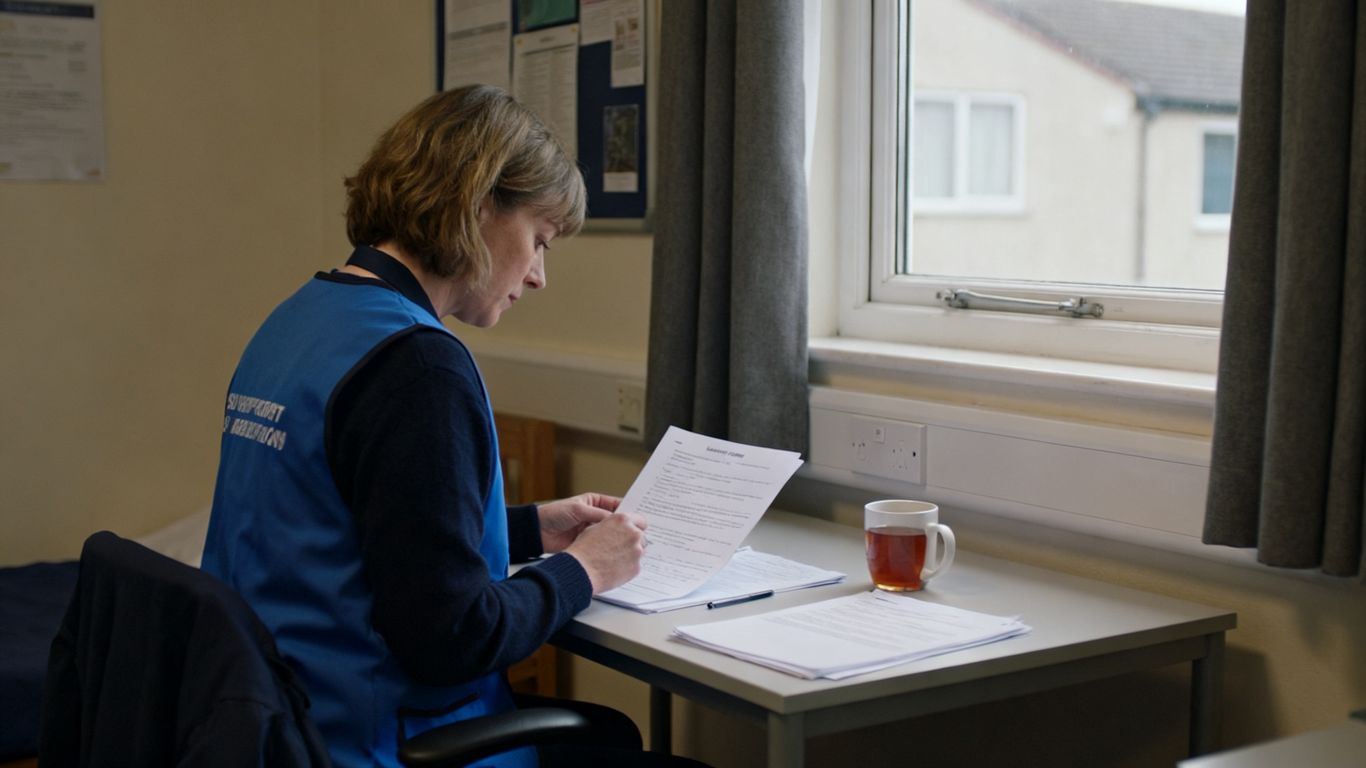
We should describe observable behaviour rather than calling someone aggressive, manipulative or difficult. For example, we might say that the resident raised their voice, stood close to another person and refused to leave a shared area. That wording gives the panel something concrete to assess without turning one incident into an identity.
We can add relevant context without speculating. If we knew the resident had received upsetting news, we could say so; if we did not know the cause, we would say that we sought to understand it rather than presenting an assumption as fact.
Describe how you assessed immediate risks and priorities
Our first questions should concern immediate safety. We would consider whether anyone was injured, whether there was a weapon, whether threats were specific, whether other residents were becoming involved and whether the person appeared intoxicated, confused or acutely distressed. We would also think about exits, safe positioning, lone-working arrangements and the need for emergency assistance.
A concise answer can show priorities in sequence. We might explain that we separated people where safe, moved bystanders away, maintained a clear exit and contacted a colleague or emergency service when the level of risk exceeded our role.
Set out the actions you took and why you took them
We should link each action to a reason, rather than reciting a list of techniques. We might use a calm tone to reduce stimulation, offer two realistic choices to restore some control, and state the boundary around threats because everyone has a right to feel safe. We would avoid physical intervention unless trained, authorised and responding within policy.
The panel will usually value proportionate judgement. We can say that we would use the least restrictive response that kept people safe, seek support early and adapt our approach if the person’s presentation changed.
Show how you reviewed the outcome and recorded relevant information
A response does not finish when voices become quieter. We would check on anyone affected, speak with the resident later if appropriate, identify any follow-up support and tell the relevant colleague or manager what had happened. Our record would separate direct observations from reported information and avoid judgemental language.
We could mention the value of reviewing triggers, timings, actions and outcomes. That helps the team respond consistently and may reveal a safeguarding concern or a support need that was not visible during the incident.
Demonstrate trauma-informed and person-centred practice
Trauma-informed practice is not a promise that every interaction will be calm. It is a way of understanding how power, fear and previous experiences can shape a person’s response to staff or rules. In an interview, we should show warmth without losing professional judgement. We should also recognise that fairness may mean responding to different needs rather than treating every person in exactly the same way.
Consider how trauma, homelessness and exclusion may affect behaviour
People living in a hostel may have experienced violence, bereavement, institutional settings, discrimination, poverty or repeated rejection. A request that seems routine to us may feel threatening to someone who has learned not to trust services. Homelessness itself can bring exhaustion, uncertainty and constant pressure, all of which may reduce a person’s capacity to regulate emotion.
We should not diagnose someone from their behaviour. Instead, we can ask what support, explanation or environmental change might make the interaction safer and more manageable.
Use respectful, non-judgemental communication
We can use plain language, introduce ourselves, explain our role and allow time for an answer. Reflecting back what we have heard can prevent misunderstandings: “You are upset because you feel the decision was made without you.” We should avoid sarcasm, public reprimands and loaded questions, especially when other residents are watching.
The principles in this supported housing interview guidance fit naturally with that approach: calmness, safeguarding awareness, non-judgemental communication and active listening all matter when answering a scenario question.
Offer choice and control where this is safe and appropriate
Small choices can reduce a person’s sense of being controlled. We might ask whether they would prefer to speak in a quieter room or outside, whether they want a colleague present, or whether they would rather discuss the issue now or after a short break. We should offer choices that we can genuinely honour and explain any non-negotiable safety requirement.
Choice is not the same as allowing a harmful situation to continue. If there is an immediate risk, we would state what must happen, explain why and involve the appropriate support rather than presenting an unsafe option as voluntary.
Avoid escalating situations through confrontation or assumptions
We should not crowd someone, challenge their account in front of others or insist on an immediate explanation when they are overwhelmed. Nor should we assume that a quiet person is safe or that an intoxicated person cannot understand anything. We can remain observant, ask open questions and adjust our pace.
If our first approach is not helping, we would pause and reconsider. A colleague may be better placed to speak, or the environment may need to be quieter before a meaningful conversation can take place.
Explain how you would de-escalate a difficult situation
De-escalation is a practical safety skill, not a performance in which we have to win an argument. We should describe how we regulate our own response, reduce unnecessary stimulation and keep an exit available. Our aim is to create enough calm for safer choices, while recognising that some incidents require withdrawal and emergency support. We should never imply that communication alone can remove every risk.
 Use calm body language, tone and positioning
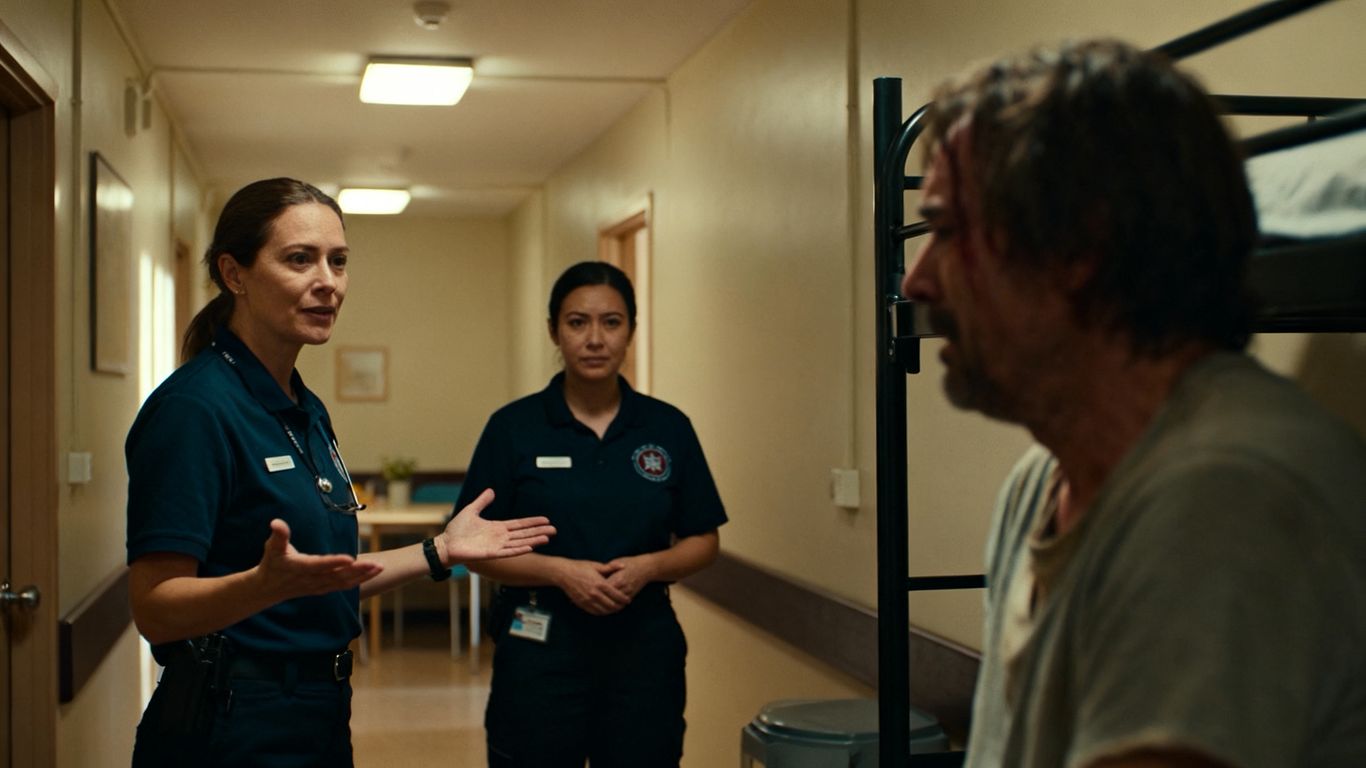
We would keep our voice steady, use short sentences and avoid sudden movements. Standing at an angle rather than directly over someone may feel less confrontational, while maintaining a safe distance protects both people. We should avoid blocking the person’s route or allowing ourselves to become trapped.
We can explain that we would remain aware of the wider environment, including other residents and potential hazards. Calm presentation is helpful, but it must be paired with situational awareness and a willingness to call for assistance.
Listen actively and acknowledge the person’s feelings
Listening does not require us to agree with every allegation. We can acknowledge emotion and still check facts: “I can hear that you are frightened. I need to understand what happened so we can keep everyone safe.” We would give the person time to speak, avoid interrupting unnecessarily and summarise the practical issue we need to resolve.
That acknowledgement can lower the sense of being ignored or dismissed. If the person is too distressed to talk, we would not press for a detailed account at that moment; we would focus on immediate safety and revisit the conversation later if appropriate.
Set clear, proportionate boundaries
Boundaries should be specific and linked to safety. Rather than saying “Calm down”, we might say, “I will listen, but I cannot allow threats towards other residents. We can speak here quietly, or we can continue with my colleague present.” This gives the person a clear route back into a safer interaction.
We should explain likely next steps honestly and avoid threatening consequences we cannot control. Consistency matters, but so does proportionality: the response should reflect the actual risk and the hostel’s procedure.
Know when to seek support or withdraw to protect safety
We would seek support when threats become specific, violence appears likely, weapons are suspected, someone is seriously injured or the person’s mental or physical state is deteriorating. If we are alone, we should follow lone-working arrangements and avoid placing ourselves in unnecessary danger. Calling emergency services can be the correct professional decision, not a failure.
Once immediate safety is at risk, our priority is to create distance, protect others and provide clear information to colleagues or responders. We should not continue negotiating simply to prove that we can manage the situation ourselves.
Address common challenging behaviour scenarios
Scenario questions are opportunities to show transferable judgement rather than memorise a perfect script. We can begin by clarifying the facts, identify immediate risks and then explain the response we would take within policy. The same principles apply across different incidents, but the practical details will change. We should avoid promising a predetermined outcome when the circumstances have not yet been assessed.
Responding to verbal aggression or threats
We would keep our voice measured, acknowledge the person’s frustration and state that threats are not acceptable. We would create space, move others away where possible and ask a colleague for support. If the threat appeared credible or immediate, we would follow emergency procedures rather than trying to resolve it through prolonged conversation.
Afterwards, we would check on affected residents and staff, record the exact words or behaviour as accurately as possible, and discuss any safeguarding or risk-management follow-up. We should distinguish an expression of anger from a specific threat while taking both seriously enough to assess.
Managing conflict between residents
We would avoid taking sides based on the first account we hear. If safe, we would separate the residents, reduce the audience and speak with each person individually. We would identify immediate concerns such as injury, intimidation, property damage or ongoing retaliation before considering mediation or a shared conversation.
For preparation, we can review this practical guide to managing resident conflict, particularly its focus on root causes, clear boundaries, objective records and knowing when third-party intervention is needed. Any agreement must be realistic, understood by both residents and supported by follow-up.
Supporting someone affected by alcohol or drugs
We would not treat intoxication as proof that a person is choosing to behave badly. We would assess consciousness, breathing, injury, confusion, aggression and any immediate medical concern, following the hostel’s substance-use and emergency procedures. We would use simple language, avoid arguing and not attempt an intervention beyond our training.
We would also consider the safety of other residents and any safeguarding indicators, such as coercion, exploitation or an unsafe person controlling access to the building. Once the immediate concern has passed, we could offer harm-reduction information or referral through the appropriate service, without making promises outside our role.
Handling suspected mental health difficulties or acute distress
We should avoid diagnosing someone in an interview answer. We can describe what we observe, ask direct but sensitive questions about immediate safety and follow the service’s crisis and safeguarding pathways. If there is a risk of serious harm, severe confusion, medical deterioration or inability to care for basic needs, we would seek urgent professional help.
We can remain compassionate while recognising the limits of hostel support. A quieter setting, a trusted colleague and a familiar routine may help, but we would not leave someone alone simply because they have asked us to if the risk assessment indicates otherwise.
Show that you understand safeguarding and hostel procedures
A confident answer shows that we understand the service is part of a wider safeguarding system. We are not expected to investigate abuse, provide clinical treatment or make legal decisions alone. We are expected to notice concerns, respond to immediate danger, record information and escalate through the correct route. We should refer to our own training and the organisation’s policies rather than inventing a procedure.
Identify when behaviour may indicate abuse, exploitation or neglect
A sudden change in behaviour may be connected to coercion, financial abuse, sexual exploitation, trafficking, domestic abuse or neglect. Warning signs might include someone appearing controlled by another person, unexplained gifts or debts, repeated injuries, fear of answering questions, missing medication or a visitor who refuses to leave.
We would speak privately where safe, use open questions and avoid confronting a suspected perpetrator. We should record what we observed and what the resident said, preserving their words as accurately as possible while escalating concerns through safeguarding procedures.
Explain when to involve a manager, emergency service or safeguarding lead
We would involve a manager or safeguarding lead when there is a concern about abuse, neglect, exploitation, serious self-neglect or a risk that requires coordinated action. We would contact emergency services for immediate threats to life, serious injury, fire, violence or urgent medical or mental health emergencies, following local policy.
It is helpful to say that we would not wait for certainty before reporting a reasonable concern. We can share relevant information proportionately, explain our reasons and document who was contacted, what advice was given and what action followed.
Follow incident reporting, confidentiality and information-sharing procedures
Our record should be timely, factual and sufficiently detailed for another colleague to understand the incident. We would include the date, time, location, people involved, observed behaviour, actions taken, injuries or damage, witnesses and follow-up required. We would store it securely and only share information with people who have a legitimate reason to receive it.
We should never promise absolute secrecy if safety information may need to be shared. We can tell the resident what we intend to do where possible, check their understanding and seek management advice if confidentiality and safeguarding duties appear to conflict.
Maintain professional boundaries after a challenging incident
A difficult incident can leave relationships strained, but we should not punish someone informally or treat them as permanently problematic. At the next contact, we can be respectful, explain any agreed follow-up and remain consistent with the support plan and house rules. We should not accept gifts, share personal contact details or discuss the incident casually with other residents.
We may also need to acknowledge the impact on the person without promising that every consequence will disappear. Professional boundaries make future support safer and help the team respond fairly rather than emotionally.
Highlight teamwork, reflection and ongoing support
Hostel work is rarely managed well by one person acting in isolation. We should show that we communicate clearly, use the team’s combined knowledge and recognise when another service is better placed to help. The wider training and support needs of homelessness professionals are also worth considering when preparing for this work; this homelessness support training overview provides a useful wider context.
Coordinate effectively with colleagues and external services
We would give colleagues a concise handover, distinguish facts from interpretation and make sure urgent actions have an identified owner. With the resident’s consent, or where safeguarding duties permit information-sharing without it, we could coordinate with health, substance-use, mental health, social care or housing services.
Coordination should not become a chain of referrals with no follow-through. We would clarify what has been agreed, tell the resident what to expect and check whether the plan is working. Good communication protects continuity when shifts change.
Explain how you would use supervision and training
Supervision gives us a safe place to review incidents, explore our responses and identify development needs. We might seek training in de-escalation, safeguarding, mental health awareness, substance use, trauma-informed practice or lone working, depending on the role and service context.
We should be honest about limits. Saying that we would ask for guidance is stronger than pretending to know a policy we have not seen. A willingness to learn shows reliability, especially in work where circumstances can change quickly.
Reflect on what worked and what could be improved
After an incident, we would ask whether our communication reduced or increased tension, whether support was called early enough and whether the environment or procedure contributed to the problem. We would consider the resident’s perspective as well as the team’s experience. Reflection should lead to a practical adjustment, such as changing a handover detail, reviewing a risk plan or arranging a follow-up conversation.
We can describe learning without blaming ourselves or others. The purpose is to improve safety and consistency, not to produce a neat story in which every decision was perfect.
Recognise the importance of staff wellbeing and personal safety
Repeated exposure to distress and aggression can affect concentration, sleep and confidence. We would use debriefing, supervision, annual leave and peer support, and report injuries or near misses through the correct process. We would also follow lone-working arrangements and avoid working beyond our competence.
Looking after ourselves is part of responsible practice because an exhausted or frightened worker may struggle to make sound decisions. We can remain compassionate while accepting that personal safety is a legitimate professional priority.
Conclusion
The strongest answer to a challenging behaviour homeless hostel interview question shows calm judgement, curiosity about the person’s circumstances and a clear commitment to safety. We can describe what we would observe, how we would de-escalate, when we would escalate and how we would learn afterwards. If we combine compassion with boundaries, accurate recording and teamwork, our answer will feel credible rather than rehearsed.
Frequently Asked Questions
What is the best way to answer a challenging behaviour question in a hostel interview?
We should use a clear situation, action and outcome structure, while explaining how we assessed risk, protected dignity, followed procedure and reviewed what happened afterwards.
Should we say that challenging behaviour is caused by trauma?
We can acknowledge that trauma and other experiences may influence behaviour, but we should avoid assumptions or diagnosis. We should describe observable facts and remain open to several possible causes.
How should we respond if a resident threatens staff?
We should stay calm, create distance, set a clear boundary, move others away if possible and seek colleague or emergency support when the threat presents an immediate or serious risk.
Is calling the police or an ambulance a failure?
No. Emergency services may be the appropriate response to serious violence, injury, medical danger or an immediate threat to life. We should follow local procedures and explain the decision clearly.
How can we show person-centred practice while enforcing rules?
We can explain the rule, listen to the resident’s perspective, offer safe choices and apply boundaries consistently. Person-centred practice does not require us to ignore risks or make promises outside our authority.
What should we include in an incident record?
We should record dates, times, locations, people involved, observed behaviour, exact relevant words, actions taken, injuries or damage, witnesses, notifications and any agreed follow-up. The record should be factual and secure.
What if we do not know the hostel’s exact procedure?
We should say that we would check the policy, ask a manager or safeguarding lead and follow our training. It is safer and more professional to acknowledge a limit than to invent a process.