Key Takeaways
Determining the right number of residents per support worker is essential for maintaining both staff well-being and high-quality care in homeless accommodations. Balancing administrative tasks with direct support requires systemic approaches to ensure that every resident receives consistent attention.
- Staffing levels must remain flexible to accommodate the varying acuity of residents in homeless hostels.
- Digital tools are necessary for tracking resident progress and managing administrative overhead efficiently.
- Standardised workflows help prevent burnout by ensuring that expectations are clearly defined and manageable.
- Regular reflective supervision is critical for identifying signs of secondary traumatic stress before they become long-term issues.
- Effective management involves a mix of objective data and qualitative assessment to balance the workload across teams.
Key factors influencing ideal caseload capacity
Finding the perfect balance between resident numbers and support worker capacity is rarely a "one-size-fits-all" calculation. We have to consider the operational context of the hostel alongside the individual needs of our residents, as these variables change how much time a single worker can dedicate to each individual. By analyzing client needs at both a team and individual level, we can ensure that our staffing levels remain sustainable.
Diversity of resident needs and vulnerabilities
Residents enter homeless hostels with vastly different backgrounds, legal statuses, and personal histories, which directly impacts the intensity of the support required. Some individuals may only need light-touch advocacy around housing applications, whereas others require intensive support for mental health, complex social isolation, or engagement with specialised services. A support worker might find that a low numerical count of residents actually involves a higher level of complexity when vulnerability is acute.
The level of support required for move-on transitions
Moving a resident into independent or supported living is a time-intensive process that involves persistent advocacy and coordination. When a hostel has a high turnover of move-on transitions, support workers must allocate significant time to paperwork, property viewings, and partnership meetings. Without accounting for these transitions, we risk underestimating the effort required to help residents successfully move into long-term stability.
Variations in hostel environment and safety protocols
Hostels operate under varying safety requirements depending on their size, the nature of their resident profile, and local regulations. Strict safety protocols, fire safety checks, and incident reporting procedures occupy valuable portions of a worker’s shift. When environments are high-risk, the increased frequency of security and compliance tasks naturally reduces the total capacity for meaningful, face-to-face support work.
Availability of multi-agency partnerships
Having strong links with external agencies can significantly offload the burden on internal support workers. When a hostel benefits from robust multi-agency partnerships, social workers, health professionals, and probation officers frequently share the responsibility of care. Conversely, where these partnerships are fragmented, the support worker often becomes the primary point of contact for every aspect of a resident’s life, creating an unsustainable pressure on their time.
Practical strategies for effective support worker caseload management
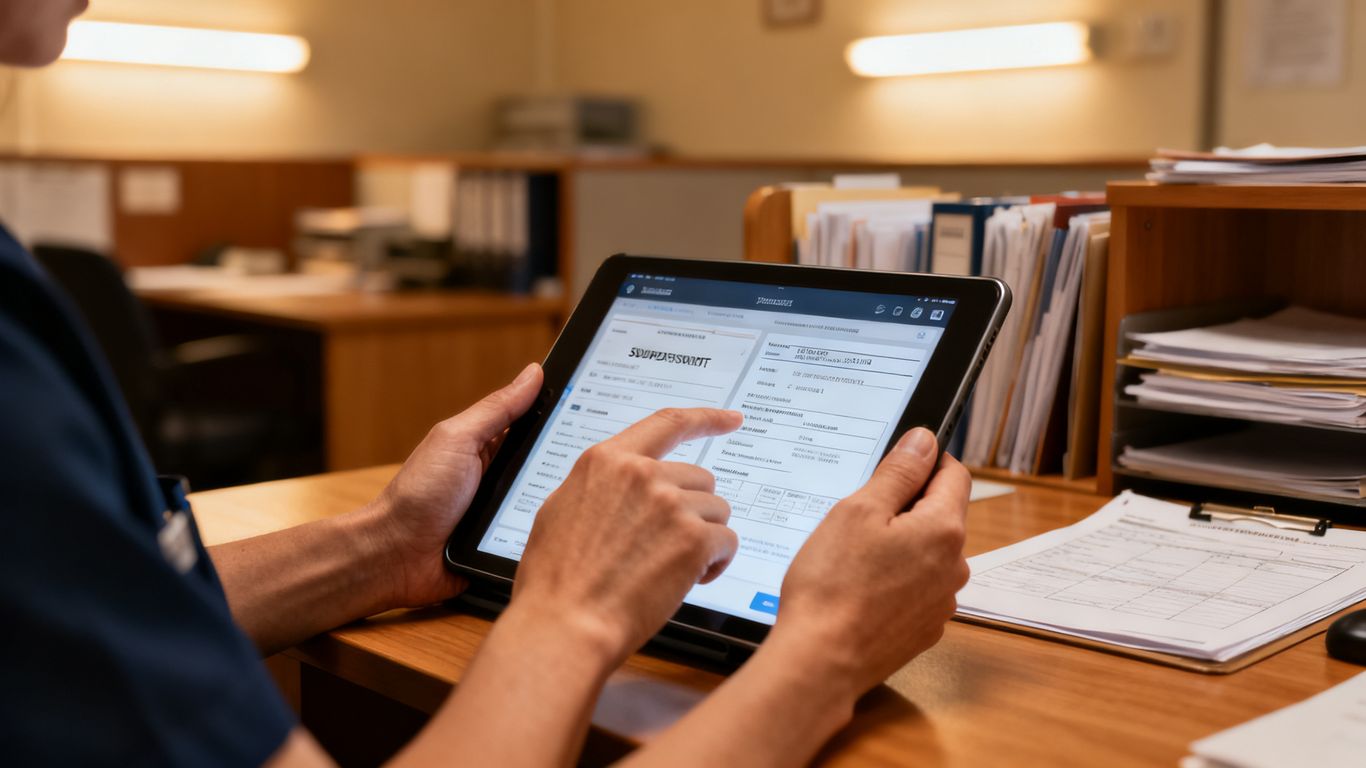 Adopting a consistent system for organizing cases helps us maintain high standards of service while preventing the team from feeling overwhelmed. We find that moving away from reliance on memory and manual files toward structured management frameworks allows everyone to see where their time is going. If you are looking for effective caseload management strategies for your team, focus on integrating systems that provide transparency and predictability.
Implementing tiered support systems based on risk
A tiered model allows us to assign different levels of interaction frequency based on the immediate needs of the resident. For example, individuals in a crisis phase are assigned to 'High Intensity' support, while those in long-term stability receive 'Maintenance' support. This structured approach helps ensure that support workers can prioritise their daily activities effectively instead of responding entirely to the loudest or most urgent demand.
Rotating caseload reviews based on resident progress
Caseloads shouldn't be static, so we advocate for monthly reviews that look at both the capacity of the staff and the changing needs of the individuals assigned to them. These reviews allow us to redistribute cases if a specific worker is carrying too much complexity or if a resident’s circumstances have shifted significantly. This practice ensures that no single worker remains under excessive pressure for an extended duration.
Utilising digital tools to track resident interactions
Digital platforms allow for cleaner communication and provide leadership with the data needed to understand true capacity. Tracking interactions helps us see the reality of how much time we spend with specific residents compared to admin work. In many cases, it becomes clear that automating simple scheduling tasks or digitalizing forms can free up an hour of high-value face-to-face time every single day.
Standardising intake and discharge workflows
Confusion during intake or a lack of process during discharge often leads to unnecessary administrative bottlenecks. By creating a standardised procedure for these key movements, we reduce the amount of guesswork and redundant reporting our staff have to perform. Consistency in these workflows makes team handovers much smoother and prevents information from slipping through the cracks.
The impact of caseload numbers on service quality
High numbers can quickly degrade the quality of care, as workers are forced to choose between thorough engagement and basic compliance. We often see that when a resident count is too high, personal connections suffer. According to research on social work caseloads, the difference between a volume-based approach and a complexity-based approach is essentially the difference between merely processing residents and actually supporting them.
Risk to resident psychological safety and stability
When workers are spread too thin, the consistency that many residents rely on for their psychological safety begins to fray. Residents often feel discarded if they cannot reach their support worker when they are feeling unstable, which can trigger cycles of withdrawal or crisis. A stable relationship is often the single most important factor in sustaining a resident's progress.
The connection between low caseloads and successful outcomes
Lower caseload numbers are statistically associated with more successful outcomes because they empower workers to engage in preventative support rather than purely reactive crisis management. When a worker has the breathing room to notice small changes in a resident’s behaviour, they are far better equipped to offer advice before a situation escalates. This proactive focus is fundamental for long-term recovery.
Determining the tipping point for support quality degradation
Every hostel has a threshold where the quality of support begins to wane, and leadership needs to be vigilant about identifying this point. It isn't just about the number of people on a list; it is about the intersection of complexity and current resources. When we stop being able to offer individualised care and start providing group-level survival support, we have crossed that tipping point.
Addressing the tension between funding and provision
Managers face immense pressure to keep case numbers high to meet funding requirements, regardless of whether those levels compromise quality. Navigating this tension requires strong advocacy from leadership to share the reality of the front-line experience with commissioners. It is vital to present evidence that demonstrates how high caseloads can lead to cost-ineffective outcomes, such as higher churn and more frequent emergency interventions.
Assessing complexity and resident acuity
 We cannot accurately measure capacity if we only count the number of residents currently residing in the building. A system that accounts for the "weight" of a case—based on its inherent demands—allows us to allocate our resources more fairly. Referencing the NASW Standards for Social Work Case Management is a helpful way to ensure that our internal assessments align with professional expectations of ethical and competent service.
Using objective assessment tools for initial intake
Using a standardised tool during the intake process ensures we have a baseline for the effort a new resident will require. We look for indicators that cover social skills, health, and legal status to classify residents into different intensity categories. This initial assessment prevents the common mistake of assigning a high-needs resident to a worker who is already at maximum capacity.
Accounting for comorbid health and addiction issues
Residents struggling with a combination of health conditions and addiction require a level of support that goes far beyond general housing advice. These cases often involve frequent medical appointments and a constant need for crisis-deescalating conversations. When we fail to treat these comorbid issues with the extra weight they deserve, we quickly find that worker capacity is overstretched.
Adjusting capacity based on high-intensity periods
Even a stable resident can have periods of extreme intensity, perhaps due to a legal issue or a family bereavement, during which they require much more attention. Supervisors should be prepared to adjust capacity temporarily, acknowledging that a worker’s workload is a dynamic entity. Keeping a portion of capacity as a buffer allows the team to pivot when these intense periods occur.
Recognising the burden of crisis intervention work
Crisis intervention is not just a standard task; it is an emotionally taxing activity that requires periods of rest and recovery afterward. When a worker is constantly cycling through crisis management, their ability to remain empathetic and effective for other residents is naturally diminished due to the intense pressure.
Just as we would protect time for administrative work, we must respect the emotional toll of crisis intervention by balancing the worker's remaining duties to prevent exhaustion.
Balancing direct support with administrative requirements
Administrative work is a necessary part of the job, but it should never be the core of the support worker's day. Finding the balance means getting creative with how we log our activities and ensuring that each piece of paperwork adds genuine value to the resident's journey. Excessive reporting often masks a lack of efficiency in our workload measurement tools.
Quantifying time spent on documentation and reporting
We often find that workers are spending more time documenting their work than actually performing it, which is an immediate sign of an broken system. Tracking exactly how long reporting takes allows us to see when administrative burden is encroaching on resident time. This requires an honest look at what reports are mandated for compliance and what reports are just legacy tasks without a clear purpose.
Identifying administrative tasks suitable for automation
Many manual tasks—like checking the same safety boxes over and over or manually alerting external partners—can be automated. We should seek out tools that remove the manual repetition from the work, allowing for faster data entry and more accurate records. Automation should support the worker’s primary objective of being present, not complicate their user experience with technical barriers.
Protecting time for face-to-face engagement
The most effective support workers are the ones who spend the majority of their time actually with the residents, building trust and maintaining rapport. We establish 'protected time' blocks in our daily schedules where documentation is discouraged, and the focus is entirely on physical outreach and resident-facing support. This ensures that no matter how busy the week becomes, there is a dedicated space for human connection.
Streamlining data entry to enhance operational efficiency
Streamlining means simplifying the entry process to ensure it only tracks what is essential to resident health and hostel safety. By adopting mobile apps or voice-to-text recording, support workers can capture information while it is still fresh in their minds. This efficiency boost prevents the end-of-day rush to complete backlog paperwork, reducing stress and improving record accuracy.
Strategies to safeguard staff well-being and retention
Retaining our best support workers depends entirely on how we protect their mental health in an environment that is often emotionally exhausting. A sustainable hostel is one that acknowledges the human cost of working with vulnerable populations. We must treat well-being as a core operational metric rather than an optional afterthought.
Recognising the indicators of secondary traumatic stress
Secondary traumatic stress can appear in many forms, including irritability, exhaustion, and a sudden loss of empathetic engagement with residents. It is the responsibility of the whole team to watch for these signs, as a worker experiencing these symptoms may not even be aware of their own decline. Providing education on what these symptoms look like is a foundational step in building a supportive culture.
Establishing protocols for regular reflective supervision
Supervision should be a dedicated space for workers to process the emotional impact of their cases, not just a time to rattle off a list of task completions. Reflective supervision provides the psychological clearance needed to handle the challenges of the job without carrying the weight home at night. This is where leaders can really make an impact on long-term retention.
Fostering a culture of shared responsibility and peer support
No support worker should feel like they are working in a bubble, especially when dealing with complex resident crises. We encourage peer support groups where workers can discuss challenges in a safe environment, sharing insights that might help manage a difficult interaction. When the team feels collectively responsible for the well-being of its members, the impact of high-stress moments is significantly diffused.
Setting realistic expectations to mitigate long-term burnout
Burnout is often the eventual result of sustained, unrealistic expectations. By clearly explaining what is achievable within a standard work week and being transparent about capacity for additional projects, management shows that they value the person behind the job title. Setting these realistic expectations prevents workers from feeling guilty about leaving tasks until tomorrow and allows them to maintain a healthier perspective.
Conclusion
Managing a healthy and effective caseload in a homeless hostel is a balancing act of data, emotional intelligence, and operational rigor. By focusing on the unique needs of our residents and prioritizing the mental and professional well-being of our staff, we can create environments where both sides of the partnership thrive. The goal is always to move toward a model that values the quality of every interaction over the quantity of cases, ensuring sustainable care that truly changes lives.
Frequently Asked Questions
How does a hostel determine the ideal number of residents per support worker?
Hostels typically determine caseloads by balancing the physical capacity of the building with the average acuity and complex needs of the individuals residing there.
Why is the workload approach better than simple caseload counting?
Counting cases often ignores how much time a specific resident requires, whereas the workload approach accounts for the level of effort and complexity a case demands.
What are the main signs of support worker burnout?
Burnout often presents as increased irritability, feelings of emotional exhaustion, a decline in empathy toward residents, and a sense of detachment from the daily objectives of the workplace.
How often should caseloads be reviewed by management?
Caseloads should ideally be reviewed on at least a monthly basis, or whenever there is a significant change in the resident profile or the team's available resources.
Can digital tools significantly reduce administrative workload?
Yes, effective digital tools can automate scheduling, simplify documentation, and reduce the time spent on repetitive reporting, which helps staff focus on face-to-face service.
What role do multi-agency partnerships play in caseload management?
These partnerships allow support workers to share the burden of care with professionals like health workers and probation officers, preventing single-staff overwhelm.
How can managers support staff experiencing secondary traumatic stress?
Managers can provide regular reflective supervision, promote peer support networks, and encourage open, honest conversations about the emotional impact of the role to help alleviate stress.